
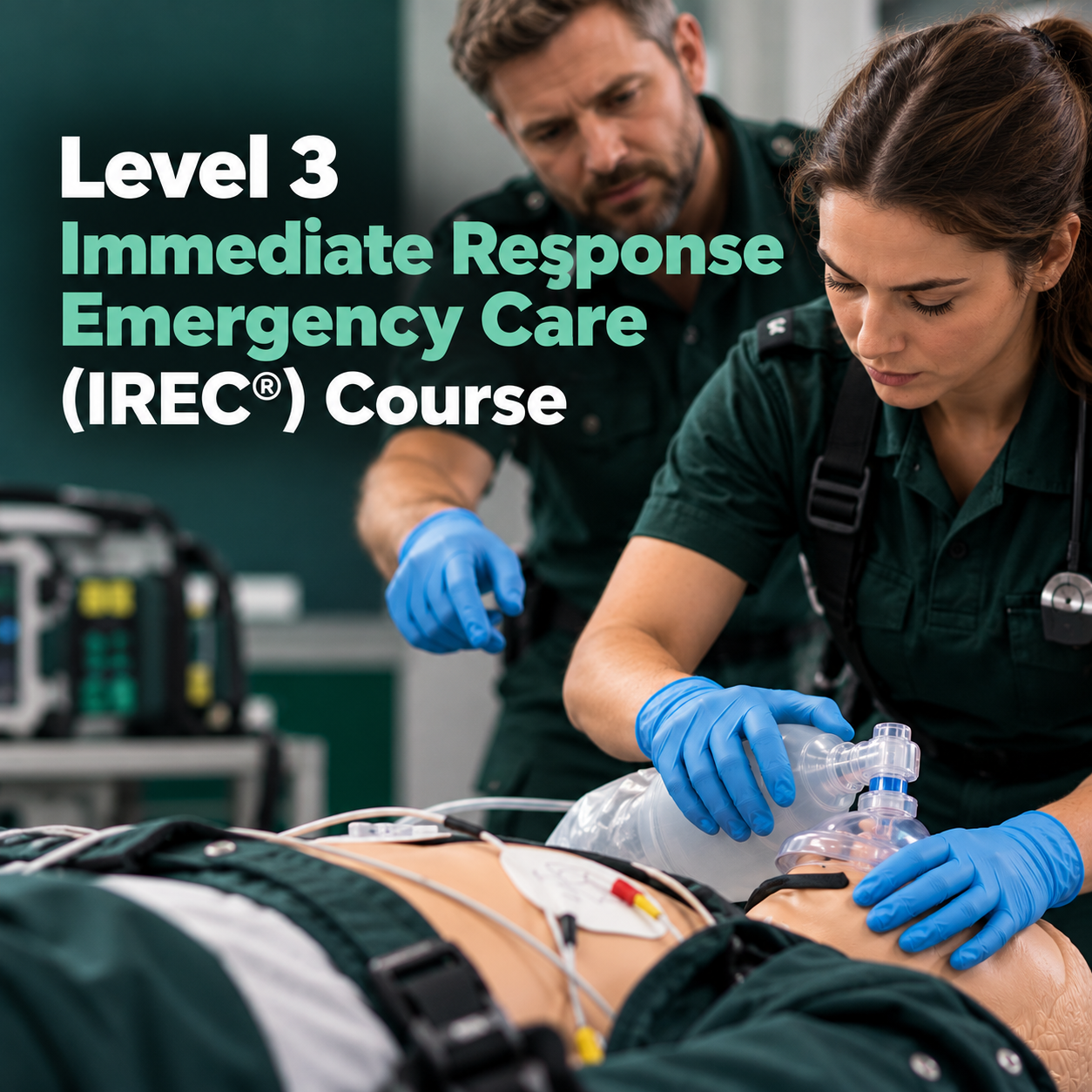
Level 3 Award in Immediate Response Emergency Care (RQF) – IREC®
Develop the knowledge, confidence and essential practical skills needed to provide immediate emergency care when every second counts.
The FAQ Level 3 Award in Immediate Response Emergency Care (RQF) – IREC® is a nationally regulated qualification designed for individuals working in event medical services, security, emergency response and other environments where immediate medical assistance may be required.
Available through SceneMedics, this training prepares learners to recognise medical emergencies, provide appropriate initial care and support patients until ambulance crews or advanced medical assistance arrive.
The course combines flexible online learning with essential classroom-based practical training and assessments, helping learners develop the skills required to respond effectively in challenging situations.
Course Overview
Medical emergencies can occur unexpectedly at public events, workplaces and in high-risk environments. Having appropriately trained responders available can make a vital difference to patient safety.
The Level 3 IREC® qualification was developed in response to findings from the Manchester Arena Inquiry, emphasising the Three Ps of emergency care:
- Preserve Life: Take prompt and appropriate action to protect life during medical emergencies.
- Prevent Deterioration: Recognise worsening conditions and provide appropriate immediate care.
- Promote Recovery: Support patient wellbeing and effective handover to emergency medical professionals.
The qualification supports the medical staffing recommendations outlined in the Purple Guide for Health, Safety and Welfare at Outdoor Events and aligns with relevant regulated first aid training standards.
What You Will Learn
Our Immediate Response Emergency Care training develops the knowledge and practical understanding required to assess and respond to a range of emergency situations.
Key areas of learning include:
- Principles of Emergency Care: Understand the responsibilities of an immediate responder and the importance of effective early intervention.
- Patient Assessment: Develop a structured approach to assessing patients, identifying urgent medical concerns and prioritising appropriate care.
- Human Anatomy and Physiology: Build essential knowledge of the body’s main systems and their relevance to emergency care.
- Airway Management: Understand basic airway management techniques and how to respond to breathing difficulties.
- Cardiopulmonary Resuscitation (CPR): Develop knowledge and practical skills in responding to cardiac arrest and delivering effective resuscitation.
- Medical Emergencies: Recognise and respond appropriately to a range of medical conditions requiring immediate assistance.
- Trauma and Injury Management: Develop an understanding of emergency care for injuries, including recognition of serious trauma.
- Patient Monitoring: Understand how patient observations can support assessment and help identify deterioration.
- Emergency Communication: Learn the importance of clear communication, teamwork and effective handover to ambulance services.
- Scene Safety and Responder Responsibilities: Recognise potential hazards, understand professional responsibilities and work within an appropriate scope of practice.
Who Is This Course Suitable For?
The Level 3 Immediate Response Emergency Care qualification is particularly relevant to individuals working in roles where enhanced first aid and immediate medical response skills may be required.
This includes:
- Event medical responders
- Event security personnel
- Specialist police officers
- Fire and rescue personnel
- Search and rescue team members
- Enhanced community first responders
- Individuals preparing to work in emergency response environments
The course is particularly beneficial for those looking to develop their knowledge and practical capabilities in pre-hospital emergency care.
Qualification and Recognition
The FAQ Level 3 Award in Immediate Response Emergency Care (RQF) forms part of the FutureQuals IREC® qualification suite.
The qualification is positioned at Category D of the Faculty of Pre-Hospital Care (FPHC) Pre-Hospital Emergency Medicine (PHEM) Skills Framework.
This category includes nationally certificated non-healthcare responders who provide pre-hospital emergency care alongside their primary professional responsibilities.
Important: This qualification does not provide a licence to practise. Learners must operate within their own or their organisation’s approved scope of practice, clinical policies and operational procedures.
Course Format – Online and Classroom Training
The Level 3 IREC® qualification is completed through two essential stages.
Part 1 – Online Theory Training
Complete the online learning modules at your own pace, developing the knowledge and understanding required for immediate emergency care.
The video-based training introduces key emergency response principles and provides a foundation for further practical learning.
Part 2 – Classroom Training and Assessment
Following the online component, learners must attend the required face-to-face classroom training.
This stage includes practical exercises, realistic
Reviews
There are no reviews yet.